
The government got Rs 9,930 crore from its follow-on offer of NMDC shares, leaving it short by Rs 1,448 crore for its year's disinvestment target of Rs 25,000 crore. In addition, it got about Rs 2.5 crore by way of interest income on the issue money from banks.

PSB may get its first non-Sikh at the helm, vigilance clearances are awaited.

The government would fall short of its target for direct tax collections for the second consecutive year, with the revenue department estimating its direct tax receipts at Rs 3,70,000 crore (Rs 3700 billion) for 2009-10.
Disinvestment proceeds of the government could be higher than the estimate of Rs 25,000 crore for 2009-10. The government has already raised Rs 13,621 crore through disinvestment in four public sector companies.Dilution of stake in National Mineral Development Corporation, the fifth public sector undertaking to come out with a public offer this year, is likely to fetch the government more than the remaining Rs 11,388 crore, thereby exceeding even the revised target.

In December last year, the finance ministry had asked five state-run banks -- Punjab National Bank, Canara Bank, Union Bank of India, Bank of Baroda and Bank of India -- to explore merger opportunities in the banking industry.

The government may take the first step towards fiscal consolidation in Budget 2010-11 by partially rolling back tax cuts given to the industry last year. The service tax rate may be restored to 12 per cent, while excise duty could be increased marginally.

The ministry of urban development has asked the finance ministry to lower the duty in order to promote the public transportation system in the country.
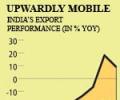
Although India's exports have started growing again after several months of decline, commerce ministry sources told Business Standard that the extension is being considered to sustain growth and stabilise it at 15 to 20 per cent.

One of the most favoured duty reimbursement schemes among exporters - the Duty Entitlement Passbook (DEPB) scheme - is likely to be scrapped, as the government gears up to introduce the Goods and Services Tax (GST) from April 1.
The government may take the first step towards fiscal consolidation in Budget 2010-11 by partially rolling back tax cuts given to the industry last year. The service tax rate may be restored to 12 per cent, while excise duty could be increased marginally.

The Indian Banks' Association recently mooted a proposal for a centralised admission test for commercial banks in the country.

The current employee strength of all state-run banks is about 672,000.

Public sector banks have performed better than their private sector counterparts in customer service.
Centre likely to miss collection target for '09-10

The long wait for a symbol of the rupee is expected to end by March next year. A committee headed by Reserve Bank of India Deputy Governor Usha Thorat has shortlisted five symbols from 4,000 entries for a public competition to select a design for the symbol.

The government is likely to ease the incidence of minimum alternate tax, or MAT, on infrastructure companies.
The Centre has turned down the proposal of the empowered group of state finance ministers to keep alcohol out of goods and services tax.
Businesses with more than Rs 10 lakh turnover may end up paying the central goods and services tax, with the Centre not agreeing to states' suggestion of keeping the threshold at Rs 1.5 crore.

Outlets of telecom companies such as Airtel and Vodafone may soon double as bank kiosks for financial services like funds transfer or bill payment, especially in parts of the country where there are very few banks or none at all.
The finance ministry is likely to drop the proposal to tax religious trusts. The proposal formed part of the direct taxes code and had raised eyebrows both within and outside the finance ministry. Under Section 10 (23C) of the Income Tax Act, any trust or institution that works wholly for public religious and charitable purposes and is approved by the chief commissioner or director general, is tax exempt.
